
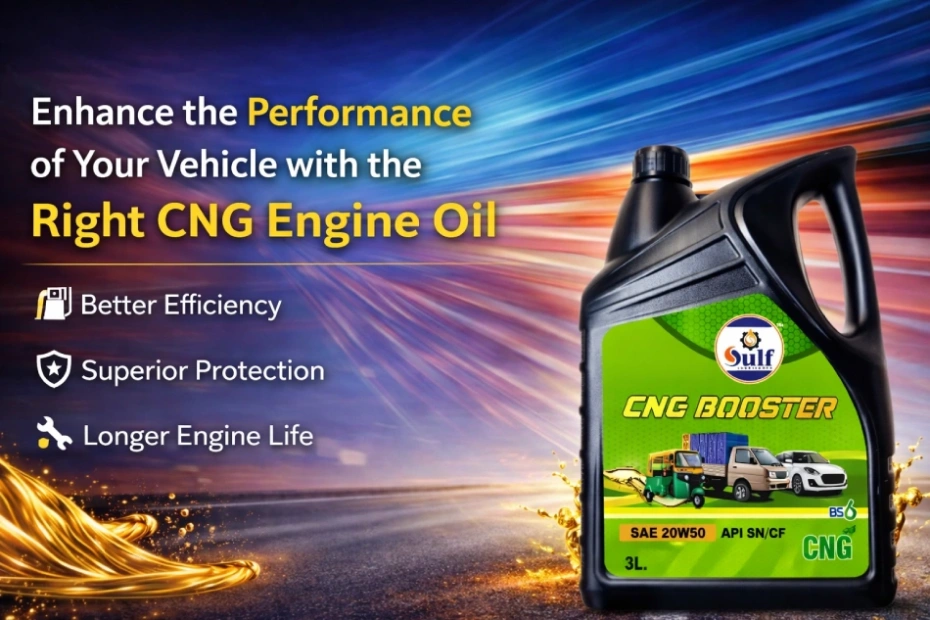
Enhance the Performance of Your Vehicle with the Right CNG Engine Oil
When it comes to reducing pollution in India, CNG (Compressed Natural Gas) is becoming increasingly popular due to its low operating costs and fuel efficiency. Furthermore, the automotive industry has experienced significant changes in recent years, particularly due to the growing demand for eco-friendly alternatives. CNG engine oil manufacturers ensure that to produce a high-quality CNG engine oil range for diverse vehicles. However, engine oil for CNG automobiles keeps the particles of pollution out of the engine valves and reduces wear and tear on metal parts.
Additionally, selecting the best engine oil for your automobile is not always about protecting your vehicle. Likewise, it is about improving performance, saving on costly maintenance, and reducing wear. Nevertheless, in this comprehensive guide, we will provide a fundamental overview of CNG engine oil manufactured by a reliable engine oil dealer, exploring its significance, technical specifications, and more.
What is CNG Engine Oil?
CNG engine oil, offered by the best engine oil distributor in India, is a specialized lubricant for CNG (Compressed Natural Gas) and LPG vehicles, formulated to withstand the fluctuating high-temperature, high-pressure conditions of gas-fueled engines. Thus, an engine oil distributor ensures superior protection against oxidation, wear (especially valve recession), and deposit buildup, which regular oil cannot provide, thereby extending the engine’s shelf life, improving operation, and ensuring compatibility with catalytic converters.
What Happens When You Use Normal Engine Oil in CNG Automobiles?
Using conventional engine oil in a CNG vehicle leads to fundamental engine issues because regular engine oils cannot handle CNG’s higher combustion temperatures and distinctive deposits. Likewise, normal engine oil fails to protect vital parts such as piston rings and valves, ultimately increasing maintenance costs. Therefore, a reliable engine oil dealer knows that CNG engines require specially formulated, low-ash oils with high oxidation resistance to handle the drier combustion, nitration problems, and the higher temperatures of natural gas. Nonetheless, let’s discuss some fundamental issues that you will face when using normal engine oil in a CNG vehicle:
1. Valve Damage
The elevated heat and dry combustion of CNG can cause deposits to form on valves. Thus, it leads to valve seat burning or recession.
2. Oil Breakdown and Overheating
Compared with CNG engine oil from CNG engine oil manufacturers, regular oil oxidizes and thins out faster at the higher temperatures of CNG engines. Likewise, it fails to lubricate effectively, leading to wear on the cylinder and piston walls.
3. Deposits and Sludge
Normal oils lack the specific additives (high detergents, low ash) required for CNG, leading to harmful sludge and deposit buildup that clogs oil passages.
4. Increase Wear
The vital blend of high heat and insufficient lubrication accelerates wear on the vital engine elements. It is one of the fundamental reasons for shortening engine shelf life.
5. Reduced Efficiency
Advanced friction from poor lubrication reduces your vehicle’s mileage, counteracting the price benefits of CNG.
Technical Specifications of CNG Engine Oils
| Parameter | Typical Specification / Range | Purpose |
|---|---|---|
| SAE Viscosity Grades | SAE 15W-40, 10W-30, 20W-50 | It ensures proper lubrication across temperature ranges |
| API Service Classification | API CF, CF-4, or CNG-specific | It is designed for gaseous fuel combustion characteristics |
| Base Oil Type | Mineral / Semi-synthetic / Synthetic | It depends on the drain interval and engine severity |
| Total Base Number (TBN) | 5 – 9 mg KOH/g | It helps to lower TBN than diesel oils due to cleaner CNG combustion |
| Sulfated Ash Content | ≤ 0.6 % wt | It prevents valve recession and deposit formation |
| Zinc (Zn) Content | ≤ 0.08 % wt | CNG engine oil protects catalytic converters and oxygen sensors |
| Phosphorus Content | ≤ 0.08 % wt | It reduces catalyst poisoning |
| Flash Point | ≥ 220 °C | It indicates thermal stability and low volatility |
| Pour Point | -15 °C to -30 °C | It ensures oil flow in cold starts |
| Oxidation Stability | High | It is essential due to higher combustion temperatures |
| Nitration Resistance | High | It prevents oil thickening caused by NOx exposure |
| Volatility (NOACK) | ≤ 12 % | It minimizes oil consumption |
| Compatibility | Suitable for CNG/LPG engines | Not recommended for diesel-only applications |
Vital Features of CNG Engine Oil
Manufacturers of engine oil offer a wide range of features that every individual should know. Furthermore, they ensure that all is designed to combat the higher operating temperatures and combustion byproducts (such as nitrogen oxides) of gas-fueled engines, secure valves, and promote clean combustion for longer engine life. Furthermore, let’s discuss some fundamental features of CNG engine oil produced by the leading CNG engine oil manufacturers:
- CNG Engine Oil, provided by a reliable engine oil distributor, offers low ash formation in the engine after combustion and high TBN retention.
- Using CNG engine oil will improve deposit control in the engine and reduce oil oxidation.
- As the most reliable CNG engine oil manufacturers, Sulf Lubricant Oil also offers the advantages of ensuring excellent cold-start performance and pumpability.
- The wide range of CNG oils prevents the engine parts from degrading due to high temperatures and oxidation.
- It has excellent low-volatility properties, ensuring control of oil consumption in engine components through the CNG engine oil.
Comparison of Top CNG Engine Oil Picks for CNG Cars
Let’s discuss the top manufacturers of engine oil while comparing their oil types, benefits, and ideal use cases!
| Oil Brand & Viscosity | Oil Type | Key Benefits | Ideal Use Case |
|---|---|---|---|
| Sufi Lubricant (20W-50) | Mineral / Semi-synthetic CNG engine oil | Designed for high-temperature CNG combustion; good protection & deposit control | Every day, city CNG cars, taxis, and fleet vehicles |
| Gulf CNG SUPREME 20W50 | Mineral Gas Engine Oil (API SL/CF) | Strong oxidation resistance and wear protection | Older CNG sedans & hatchbacks, general city driving |
| Gulf Multi CNG 20W-40 | Multi-grade Mineral CNG & LPG oil | Minimizes component wear; good hot-engine reliability | CNG cars in hot climates, daily commuters |
| CNG Power 20W50 Engine Oil | Mineral / Standard CNG oil (API SM/CH) | Reliable basic protection & lubrication | Budget builds, taxis, high-mileage engines |
| Castrol / Balmor / MICO 20W-50 range | Mineral / Semi-synthetic CNG oil | Thermal stability, deposit control, and engine wear reduction | Wide range of CNG cars, from hatchbacks to sedans |
| New MICO CNG 20W-50 | Low-ash Natural Gas Engine Oil | Excellent cleanliness, oxidation & corrosion resistance | Modern CNG engines require low-ash performance |
| Jaibros 5W-30 Synthetic (CNG compatible) | Fully Synthetic Multi-Grade Oil | Better cold-start performance & fuel efficiency | Modern CNG cars, turbo engines, mixed city-highway use |
| Shell Helix HX8 5W30 | Fully Synthetic engine oil | Superior cleaning, wear protection & efficiency | Newer CNG cars require full synthetic quality |
| Castrol Magnatec 5W-30 | Semi/Synthetic engine oil | Protects during frequent stop-start city driving | CNG cars are driven mostly in urban traffic |
The Expanding Future Trends and Innovations of CNG Engine Oil
The future of CNG engine oil is very exciting, especially with the growing adoption of clean fuels in India and around the world. Today, CNG vehicles are more economical and environmentally friendly than regular engine oils. Technology is emerging to meet this need. Modern CNG engine oils are now available with improved oxidation stability, low ash content, and higher thermal stability, making them perform much better than in the past.
Future trends will primarily emphasize the need for superior additive technology capable of withstanding high temperatures and low-combustion conditions. Furthermore, such oils decrease piston residue and prevent wear on the valve seats. More emphasis will also be placed on the use of smart lubrication approaches and synthetic blends, with continued focus on fuel efficiency. As a key aspect in the innovation process, CNG engine oil manufacturers are developing research-oriented formulations.
Additionally, ideas like online monitoring and condition-based oil change methods are also going to become quite trendy. Thus, it will be very helpful for fleet operators and transporters. Likewise, the importance of an effective engine oil distributor in India is bound to increase, as focusing on providing the right product to the right customer will play an integral role in future success. Nevertheless, it is already evident that technology, efficiency, and an eco-friendly transport system will make the CNG engine oil future-proof.
It’s Time to Wrap Things Up!
When it comes to convenience, using normal engine oil in your CNG car might be convenient. However, it causes significant long-term damage, increases maintenance costs, and reduces the vehicle’s mileage. Furthermore, the CNG engines need dedicated low-ash, oxidation-resistant engine oils to maintain high combustion temperatures and ensure seamless performance. Furthermore, if you want your CNG car to run like a dream on the road, ensure you use the best-quality CNG engine oil.
At Sulf Lubricant, one of the leading CNG engine oil manufacturers, we focus on continuous innovation to enhance our products. Additionally, we continue to receive fundamental reviews from our potential customers to help us understand our shortcomings. Connect with us to purchase our CNG engine oil and enhance your vehicle’s overall health today!
Frequently Asked Questions
For CNG vehicles, a low-ash synthetic oil specifically formulated for CNG or LPG engines is best. Furthermore, it can better withstand higher temperatures and provide valve protection.
The duration required for changing the engine oil depends on the type of oil and the recommendations of the car’s manufacturer. For CNG engine oils, the change interval can be longer due to their improved oxidation characteristics.
Typical symptoms may include poor engine performance, increased fuel consumption, and the appearance of sludge on engine components.
Yes, synthetic CNG engine oils are definitely superior in terms of protection, longer oil change intervals, and performance in severe conditions.